

The long, trailing stems and marbled leaves of a devil’s ivy plant easily make a statement in any room. Whether they’re trailing from a hanging basket or climbing up a coir pole, these plants catch the eye!
Even better, devil’s ivy is difficult to kill — hence the name (or so people believe). Keep the plant happy with a chunky potting mix, indirect sunlight, and moderate humidity, plus watering when the soil is mostly dry.
If you want to add some green to your house, devil’s ivy is one of the best plants, even for beginners. Learn more about proper care so you’ll have one devilishly good-looking plant!
Potting Soil | Light | Humidity | Watering | Plant Supports | Pruning | Fertilising | Repotting | Propagating | Common Problems
Devil’s Ivy Plant: A Quick Intro
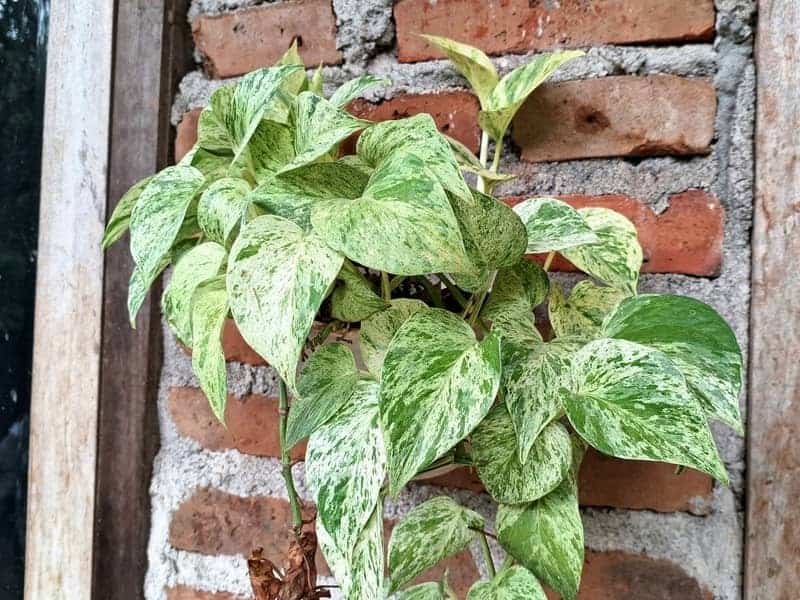
Epipremnum aureum is a plant of many nicknames — devil’s ivy, golden pothos, devil’s vine, or ivy arum, to name a few. It’s also an aroid plant, just like Monsteras and philodendrons.
It used to be identified as Pothos aureus, but has since been reclassified to E. aureum. The nickname stuck, so if you see pothos plants, those are E. aureum and its cultivars!
Other outdated classifications include Scindapsus aureus and Epipremnum pinnatum ‘Aureus’.
These vining plants are native to French Polynesia, but have become naturalised in many regions, including South Africa, Southeast Asia, and Australia.
Like philodendrons, devil’s ivy has glossy green, heart-shaped leaves on its vines. The foliage can be variegated in white, cream, or yellow, depending on the cultivar.
Some popular pothos cultivars are Neon Pothos, Pothos N’Joy, and Marble Queen.
Devil’s ivy is poisonous for humans and pets (including cats and dogs) when ingested. Keep the plant out of reach of pets and small children.
Best Growing Conditions for Devil’s Ivy
These indoor plants are popular for a reason: they’re easy to grow even for people with brown thumbs! Here’s how to set up your pothos so it thrives.
What potting mix to give devil’s ivy?
The best soil for devil’s ivy is a chunky, well-draining potting mix that’s slightly acidic. Look for one specifically for aroids or amend regular houseplant mix with perlite, coir, and bark.
You want potting soil that’s light but retains moisture without getting waterlogged.
The best pot for devil’s ivy is a clear nursery pot with good drainage holes. That way, your plant doesn’t sit in soggy soil, and you can easily check the moisture levels.
How much light does devil’s ivy need?

Devil’s ivy plants do best in bright, indirect sunlight, such as by a north- or northeast-facing window in Australia.
However, keep them out of direct sunlight (especially in the afternoon), as it can scorch the leaves.
If you don’t have a window with enough sun, place the plants under a full-spectrum grow light for 8–10 hours.
Pothos plants can tolerate medium to low light conditions, though they can get leggy or lose their variegations.
How much humidity for devil’s ivy?
Devil’s ivy thrives in moderate to high humidity levels — at least 45%, but ideally 60% or more. You can group it with other plants or place it in an indoor greenhouse to increase humidity.
Additionally, keep the plant in warm environments with temperatures between 18ºC and 32ºC. Avoid exposure to drafts (such as near vents) or temperature fluctuations (like near air-conditioners).
Devil’s Ivy Plant Care
Pothos may be a low-maintenance plant, but that doesn’t mean no maintenance. Knowing how to care for devil’s ivy keeps your plant happy and healthy.
How often to water devil’s ivy
Try not to water your devil’s ivy on a schedule — instead, base it on moisture levels, pot size, and amount of light. A good general rule is to water when the soil is mostly dry!
Check moisture levels with a finger or wooden stick. The plant shouldn’t stay dry for too long, but it also dislikes wet feet.
Scale back watering during rainy or cooler months, as the plant will take longer to dry out.
To water your pothos, place it in a container with water so it can absorb moisture through the drainage holes. Lift the pot and let the excess water drain out before placing the plant back in its spot.
How to grow devil’s ivy upward

In the wild, devil’s ivy is a climbing vine that attaches to trees using aerial roots. You can mimic this behaviour by giving it a stake or support so it can grow upwards!
Indoor gardeners often use moss poles, coir poles, or wood stakes.
Position the pole near the back of the pot, then arrange the plant so that the pole doesn’t disturb the roots. Backfill the pot with soil to hold everything in place.
Use Velcro plant tape or soft ties to attach the plant’s stem to the support, tying between nodes. Make sure the foliage points towards the light!
How to prune devil’s ivy
You shouldn’t need to prune a healthy devil’s ivy unless it has leggy or unruly growth. Devil’s ivy grows pretty fast, adding up to 30cm a month.
However, you should prune right away if there are pests or disease.
For pruning devil’s ivy, use clean, sharp shears to make a clean cut between leaf nodes. Don’t forget to save any healthy cuttings for propagating!
Does pothos need fertiliser?
Some brands of potting soil come pre-mixed with fertiliser, so it’s not strictly necessary to feed your pothos.
Still, you can give your devil’s ivy a diluted, balanced houseplant fertiliser during the growing season (spring and summer).
Reduce or skip fertilising during autumn and winter when the plant’s growth is slower. If you use a grow light, though, you can fertilise year-round at a lower dose.
How to repot devil’s ivy
Repot your devil’s ivy plant when it is root-bound or the potting mix is over 1 year old. You can repot any time of year, but it’s best done during the growing season.
Signs your pothos needs repotting ASAP include roots poking out of the drainage holes or potting mix drying out quickly.
When repotting, choose a larger pot that’s 5–8cm wider at the top. Gently remove the plant from its container and check the roots or soil for any issues.
Brush off any loose soil before transferring the plant to its new container. Backfill the pot with fresh potting mix, then give it a gentle shake to settle the plant before watering.
Propagating Devil’s Ivy

If you want more plants, the easiest way is to propagate devil’s ivy in water.
Take your pothos cuttings from a healthy stem, about 10–15cm long with a few leaf nodes. Remove the bottom leaves, but leave one or two at the top!
Place the cuttings in a clear container, then add enough water to cover the lowest leaf nodes. The new roots will emerge there.
Give the cuttings lots of bright, indirect sunlight and good ventilation. Pothos propagations root quickly in water, usually taking 2–4 weeks.
Once the cuttings have new roots at least 5cm long with secondary roots, transfer them to a small pot filled with soil. Keep the potting mix consistently moist for a few weeks to help the new plant adjust.
Common Problems with Devil’s Ivy
Like other indoor houseplants, pothos plants can be susceptible to watering issues, stress, or pests.
Yellow leaves
If your devil’s ivy leaves start to turn yellow and wilt, the usual culprit is overwatering, which leads to root rot.
Overwatering is caused by watering too often rather than too much. If the soil stays wet and doesn’t get to dry out, it suffocates the roots and causes rot.
Inspect the plant’s roots ASAP — if they’re dark or mushy, come off easily, or smell bad, those are signs of rot!
Rinse off all the soil from the roots, then use disinfected shears to cut off the rotted parts. Leave only the growth that’s still white and firm.
It’s optional, but you can spray the roots with 1 part hydrogen peroxide to 4 parts water.
Repot your pothos in fresh potting mix and do not water for a few days to give the plant time to bounce back.
Leaves curling
For devil’s ivy leaves that are brown and curling, it may be due to underwatering, low humidity, or too much sun.
Check the soil to see if it feels dry, and water immediately. In severe cases, the soil will be hydrophobic and cannot hold moisture.
Place the pot in a container of tepid water for a few hours to rehydrate the potting mix. The plant should recover, though any brown, brittle leaves will be lost.
If the soil is fine, it’s likely the leaves have gotten scorched from sun exposure. Move the plant away from the window or to somewhere it doesn’t get afternoon sun.
Pests
Common pests that affect devil’s ivy (and other indoor plants) include:
| PEST | SIGNS | TREATMENT |
| Fungus gnats | Small flying insects; yellowing foliage | Water with Mosquito Bits or Dunks; yellow sticky traps for the adults |
| Mealybugs | Sticky residue on leaves (“honeydew”), tiny insects in leaves or soil | Wipe off bugs with cotton buds and alcohol; systemic pesticide |
| Spider mites | Dark dots on leaves; white specks or webbing on leaves and petioles | Wipe off with cotton buds and alcohol; spray with insecticidal soap |
| Thrips | Tan or yellow bugs in soil; brown or silver leaf spots; misshapen new leaves | Spray foliage with insecticidal soap or neem oil; systemic insecticide |
If you suspect or find pests, quarantine the affected pothos away from other plants so they don’t spread. Prune off any infested foliage and dispose of it immediately.
FAQs About Growing Devil’s Ivy
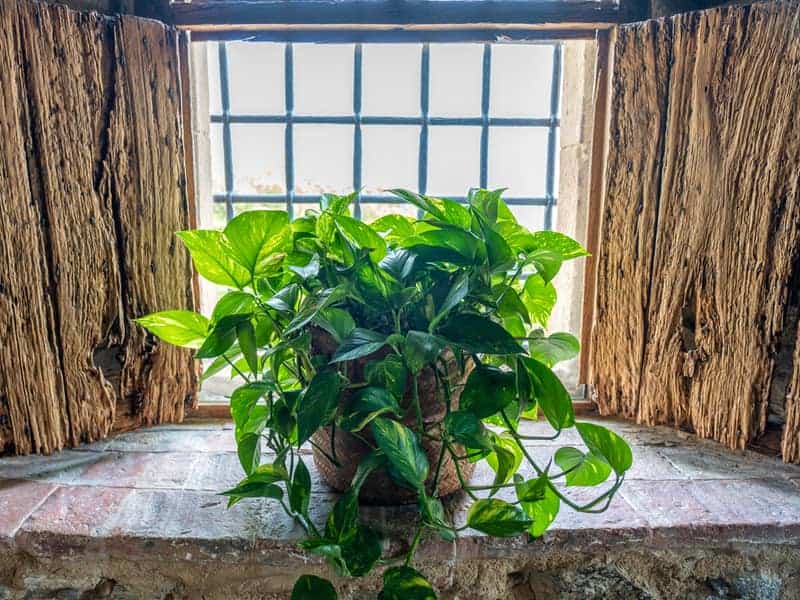
Want to know more about growing pothos plants? Here are answers to other questions people might have about devil’s ivy care.
Does devil’s ivy grow better in water or soil?
Devil’s ivy can grow in water and soil, but it grows quicker and gets more nutrients in soil!
Water by itself doesn’t have many nutrients, so growth is slower. You’ll need to use a water-soluble fertiliser to maintain good nutrient levels when growing plants in water.
On the other hand, hydroponic setups lessen the risk of over- or underwatering, and make it easier to monitor root health.
You can propagate your pothos cuttings in water, then leave them there permanently.
Can devil’s ivy grow outside?
No, you should not grow devil’s ivy outdoors in Australia. It is not a native plant and has become naturalised in the country since it can spread aggressively, so it has been classified as an environmental weed.
If you’ve already got a pothos sprouting in your garden, though, go ahead and consult a local gardener about how to keep it in check (or remove it, if needed).
Does golden pothos have flowers?
Devil’s ivy very rarely produces flowers, whether grown indoors or out in the wild. The plant has a gene that prevents it from readily creating blooms.
Pothos Brazil vs Philodendron Brasil
There is no “Pothos Brazil” plant — that’s just a misnomer for the Philodendron Brasil, a cultivar of Philodendron hederaceum or heartleaf philodendron!
Philodendrons and pothos plants are often confused with each other as they both have glossy, heart-shaped leaves. They are separate plant genera, though both are related as aroids (family Araceae).
