
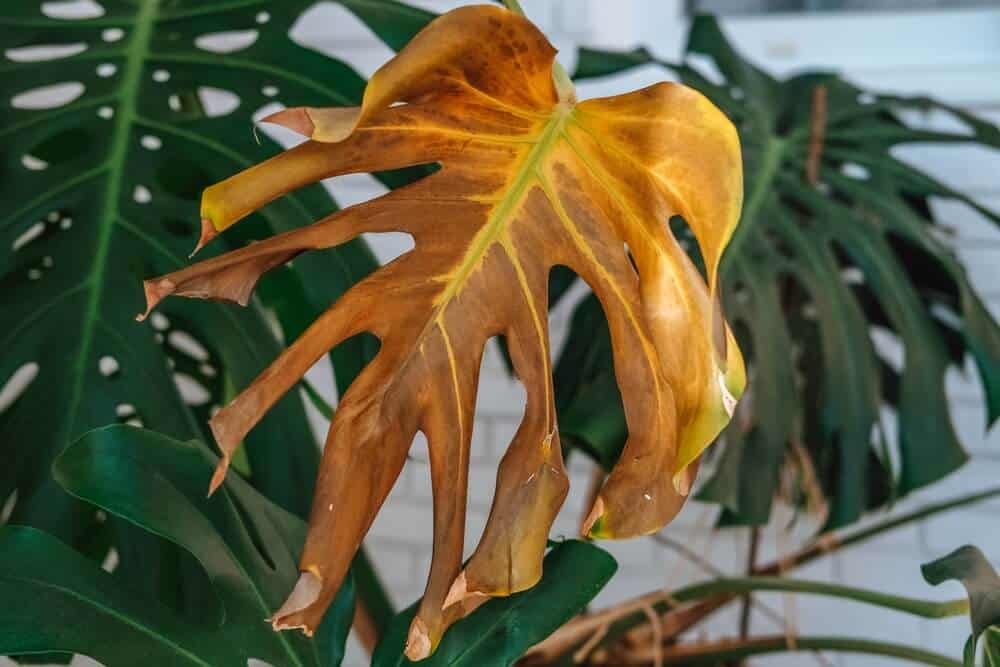
Leaves are usually the first big sign that something is wrong with your Monstera. Happy plants will have glossy green leaves, but unhealthy plants have foliage that can turn yellow or worse, brown.
The way your Monstera’s leaves start becoming brown can tell you what the issue is, whether it’s crispy tips or dark brown spots.
Common causes for Monstera leaves that turn brown include:
Don’t ignore signs of stress or poor health in your Monstera! But before you panic over your plant, understand how and why the foliage has turned brown so you can fix it.
Why are My Monstera Leaves Turning Brown?

Brown leaves on a Monstera are usually caused by watering issues or environmental stress.
Once you figure out what’s causing the discolouration, you can treat the issue.
Natural ageing
Plants have a natural life cycle, which includes leaves ageing and dying!
Over time, the lower, older leaves of your Monstera will slowly turn yellow then brown, before falling off. This is a process called senescence.
If new leaves continue to emerge and only the older foliage is dying off, that’s normal ageing.
HOW TO FIX IT:
Fortunately, there’s nothing to fix! Continue caring for your Monstera plant and allow the plant’s leaves to drop on their own.
Leaf bruising
Physical damage to the leaf by either humans or pets can cause “bruises” on the surface, making it appear brown and thin. Sometimes there’s moisture around the spot, too.
Rough handling while pruning, pots getting knocked down, or even excitable kids can bruise a plant. Think of it like you banging your knee on a table edge!
HOW TO FIX IT:
Since it’s physical damage, there’s no need to do anything. The leaf will naturally die off as the plant recycles its nutrients.
If needed, find ways to prevent physical damage in the future. Place your plants out of reach of kids or secure their pots so they don’t fall.
Underwatering
Monstera leaves turning brown and crispy are a sign of underwatering (or less commonly, very low humidity).
Both underwatered and overwatered Monsteras start with wilted foliage. But with underwatering, the tips of Monstera leaves will start curling, then become brown and brittle. Eventually, the dryness spreads over the whole surface.
The potting mix will feel hard and dry, and in severe cases, there will be a gap between the soil and the pot. That means it has contracted and likely become hydrophobic (does not retain moisture).
HOW TO FIX IT:
Resist the urge to dump water onto your Monstera. The water will either fail to penetrate the soil mix or the roots will struggle to absorb it, leading to root rot.
Instead, carefully rehydrate the soil by bottom watering. Place the pot in a larger container of tepid water, so the plant can slowly absorb water through the drainage holes.
Let the plant sit in the water for a few hours, then lift it out so the excess water can drain away. Keep an eye on the soil afterwards — if it dries out too quickly, you’ll need to replace it.
Also, try to keep indoor humidity levels to at least 50% so your plants are comfy!
Overwatering

If your Monstera leaves are turning brown and yellow, the more likely culprit is overwatering! It means you’re watering your plant too often (not that you’re giving it too much water).
When the soil stays wet for too long, it suffocates the roots and leads to root rot. Other causes could be too-big pots, dense soil, or poor drainage, which all lead to too-wet conditions.
An overwatered Monstera looks “sick,” with wilting foliage that’s yellow with brown splotches. Meanwhile, the roots will be dark brown and mushy, and will come off easily when pulled.
HOW TO FIX IT:
If you suspect overwatering and root rot, gently remove the plant from its pot and inspect the roots. If you see rot, cut off all affected roots with a clean pair of shears. You only want to leave white, healthy growth.
Rinse off all the soil and wash the pot. As an optional step, spritz the roots with a mix of 1 part hydrogen peroxide to 4 parts warm water.
Repot your Monstera in fresh, well-draining soil and a pot with plenty of drainage. Wait a few days before giving it a drink, then let the soil dry out most of the way between watering.
Too much sun
This is especially true for variegated Monstera cultivars, like a Thai Constellation or Monstera deliciosa Albo. Too much exposure to direct sunlight can scorch the leaves.
The foliage will appear “washed out” with brown patches, which can be crisp (usually on green leaves) or soft (variegated leaves). That’s because overexposure has “burned” the chlorophyll in the leaf.
You can also overheat a plant by placing it too near a bright window or other glass items, like a glass table.
HOW TO FIX IT:
If the plant is by a window that gets strong afternoon sun (especially in north- or northwest-facing windows in Australia), move it to about 30cm away. This lets the plant get indirect sunlight without overexposure.
Alternatively, you can filter the light with blinds! Or set your Monstera under a full-spectrum grow light instead.
Pests
Some pests can cause brown spots and other leaf damage for Monsteras.
Here’s a quick rundown of common pests, symptoms, and how to treat them.
| PEST | SIGNS | TREATMENT |
| Aphids | Sticky residue (honeydew) on leaves; curled foliage; sooty mould | Insecticide granules; neem oil spray; insecticidal soap |
| Spider mites | White specks or webbing on leaves and petioles; small brown spots on foliage | Wipe off mites and webbing with cotton bud and rubbing alcohol; insecticidal soap spray |
| Thrips | Brown or silver spots on foliage; brown or black leaf edges; tiny jumping insects | Insecticidal soap or neem oil spray; systemic insecticide |
Fertiliser burn
Indoor plants need fertilising, especially during the growing season (spring and summer). However, over-fertilising leads to chemical burns from an excess of certain minerals or salt.
Check your Monstera for brown or black spots, usually on yellowing leaves. The roots may be “burned” as well, appearing black and withered.
HOW TO FIX IT:
You’ll need to flush all the fertiliser from the soil ASAP! Place the pot under the tap, then run the water so it saturates the soil and drains out the bottom.
Keep going for several minutes to rinse out as much fertiliser as possible.
Do not fertilise your Monstera for a few months. When you do, follow the package instructions for dilution and frequency.
You can also rinse off all the soil from the roots and repot the plant in fresh soil instead.
Disease

These are rarer, but some bacterial or fungal diseases can cause brown spots and other discolouration on Monstera plants.
Root rot due to overwatering is the most common (yep, it’s a pathogen called Phytophthora!), but there are others.
| DISEASE | SIGNS | TREATMENT |
| Anthracnose | Sunken spots that start yellow then turn brown; wilting leaves | Fungicide; improved air circulation |
| Leaf spot | Clustered dark spots that feel slimy or moist; mushy, bad-smelling bruises on leaves; yellow rings (fungal) | No treatment for bacterial leaf spot; for fungus, prune all affected tissue and apply copper fungicide |
| Wilt | Brown or black leaves and stems; wilting foliage; general plant decline | No treatment; plant must be disposed of |
Why Are My New Monstera Leaves Turning Brown?
Sometimes we discover new Monstera leaves that are turning brown before unfurling. If you do, don’t panic!
One common cause, especially with beginner plant parents, is misting.
Some sources online will recommend lightly misting plants to “raise humidity,” but that isn’t effective. Instead, you risk moisture getting trapped inside the furled leaf, which causes the new growth to rot.
High humidity can also create moist conditions that lead to rot.
Other causes of new Monstera leaves that turn brown are:
- Thrips
- Low light
- Underwatering
- Overwatering and root rot
- Cold drafts or damp conditions
- Inconsistent watering schedule
To fix this, isolate the cause — is the soil too wet or dry? Too little light? Then address the root issue (ha!) and observe the plant to make sure it recovers.
Should I Cut Brown Leaves Off a Monstera?
Unless your plant has pests or disease, there is no need to remove brown leaves. The plant will naturally let them drop when senescence is done.
Still, if the appearance is an issue, give the leaf a light tug. If it comes off easily, then the leaf was ready to come off already.
For pests or disease, though, prune your Monstera immediately. Remove all the affected foliage and dispose of the cut parts properly.
Monstera Plant Care for Healthy Leaves

Brown leaves happen when caring for plants, especially as they age and grow. But you can minimise or prevent many causes of leaf browning with proper plant care.
Make sure your Monstera has good air circulation to lessen the risk of pests and disease. Give it lots of indirect natural light or keep it under a full-spectrum grow light.
Avoid watering on a schedule — instead, check the moisture levels with your finger or a wooden stick. Only water your Monstera when the soil is mostly dry, and err on the side of underwatering if you’re unsure.
If you encounter issues, identify the underlying cause first so you can treat the plant properly! Trying too many solutions at once will stress your Monstera and lead to further damage.
Too many brown, dying leaves usually signal that the plant is dying, though. It’s better to cut off the healthy stems so you can propagate your Monstera into new plants.
Still, Monsteras are popular as houseplants since they’re tough, so they can bounce back from most issues. With a little extra care, they’ll go back to lush green leaves in no time.
